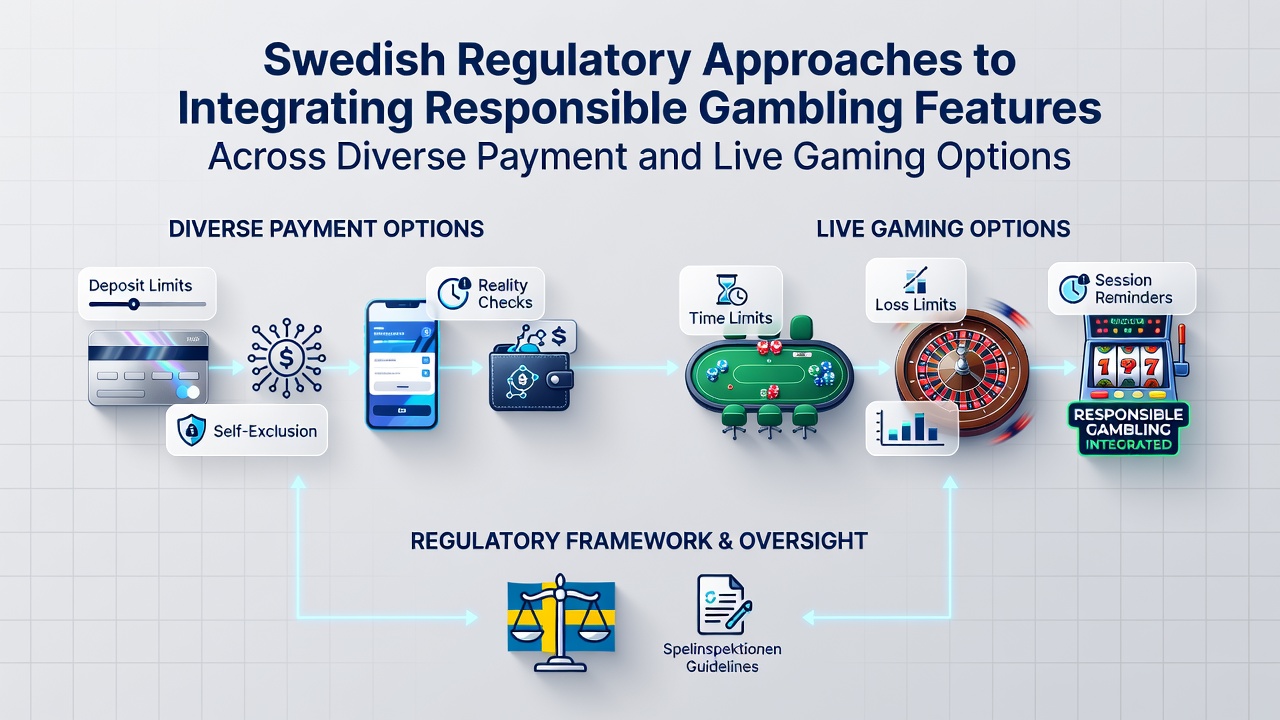
Swedish Regulatory Approaches to Integrating Responsible Gambling Features Across Diverse Payment and Live Gaming Options
Sweden maintains a structured licensing system through Spelinspektionen that requires operators to embed responsible gambling tools directly into both payment processing and live gaming environments, and this approach has evolved steadily since the 2019 re-regulation of the market. Operators must verify player identities at multiple points during deposits and withdrawals while also providing real-time options for setting deposit limits, session reminders, and temporary exclusions that function across mobile apps and desktop platforms alike.
Core Requirements for Payment Integration
Payment methods ranging from bank transfers and card transactions to e-wallets and mobile solutions must connect with centralised verification systems so that self-exclusion lists update instantly across all channels, and this linkage prevents players from bypassing restrictions by switching providers. Data from Spelinspektionen shows that licensed operators processed over 85 percent of transactions through verified accounts by early 2025, with mandatory checks triggered after cumulative deposits reach defined thresholds. These rules extend to live gaming environments where quick top-ups during ongoing sessions require the same identity confirmation that applies to standard deposits.
Live Gaming Oversight and Tool Placement
Live dealer tables and streaming platforms fall under the same licensing conditions as digital slots, which means operators install pop-up messages, reality checks, and cooling-off prompts that appear at intervals chosen by the player or mandated by the regulator. Technical standards issued by Spelinspektionen specify that these features cannot be disabled during active play, and they must remain visible on both desktop and mobile interfaces used for live blackjack, roulette, and poker variants. Research from the European Commission indicates that markets with similar real-time intervention requirements report lower rates of extended play sessions compared with jurisdictions lacking such mandates.
August 2026 Implementation Updates
Beginning in August 2026, Spelinspektionen will enforce expanded API connections between payment gateways and player management systems, allowing automatic suspension of live game access once a deposit limit or self-exclusion flag activates. Operators have already begun testing these integrations with major e-wallet providers to ensure seamless transitions without interrupting ongoing live sessions for other verified players. The changes also require clearer display of transaction histories within live gaming lobbies so users can review spending patterns without leaving the table interface.
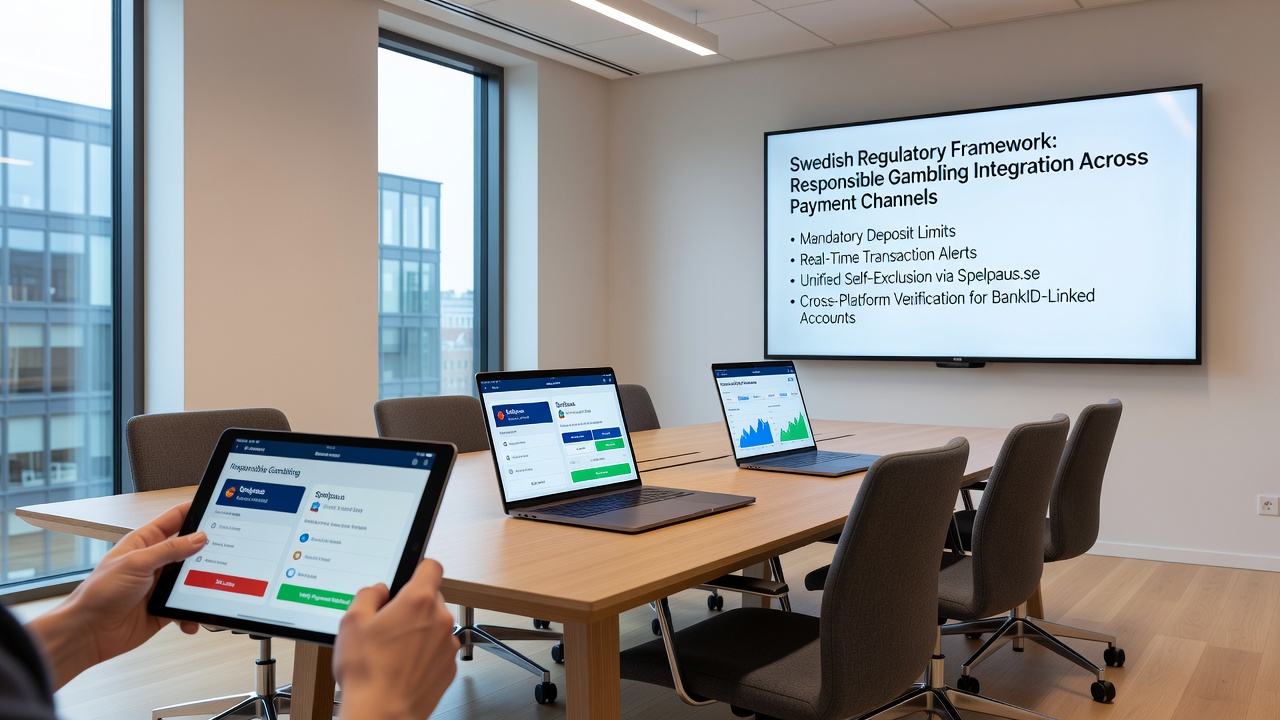
Cross-Platform Consistency Measures
Regulations demand that responsible gambling settings chosen on one device carry over to all other access points, including tablets used for live streaming and smartphones used for quick deposits during breaks. This continuity prevents players from resetting limits by logging in through a different payment channel or switching between live and virtual game modes. Industry reports compiled by the Canadian Centre on Substance Use and Addiction highlight similar cross-device requirements in other regulated markets as effective at reducing fragmented player tracking.
Monitoring and Compliance Reporting
Operators submit quarterly data on feature usage rates, including how often players activate deposit caps or cooling-off periods within live environments, and Spelinspektionen audits these figures against transaction logs to identify gaps. Non-compliance can result in licence conditions or fines scaled to revenue, while consistent adherence may qualify operators for streamlined renewal processes. Academic studies from Australian universities have examined comparable reporting frameworks and found that transparent data sharing between regulators and operators correlates with earlier detection of high-risk behaviour patterns.
Conclusion
Swedish rules continue to tie responsible gambling mechanisms tightly to both payment flows and live gaming delivery, creating a unified system that updates in real time and spans multiple device types. As the August 2026 enhancements take effect, operators will face stricter technical demands while players gain more immediate tools for managing activity across every available option. The framework relies on documented compliance metrics and ongoing technical standards rather than voluntary measures, maintaining consistent application across the licensed market.